Insights
All mobile operators now live at Oslo Cancer Cluster Innovation Park
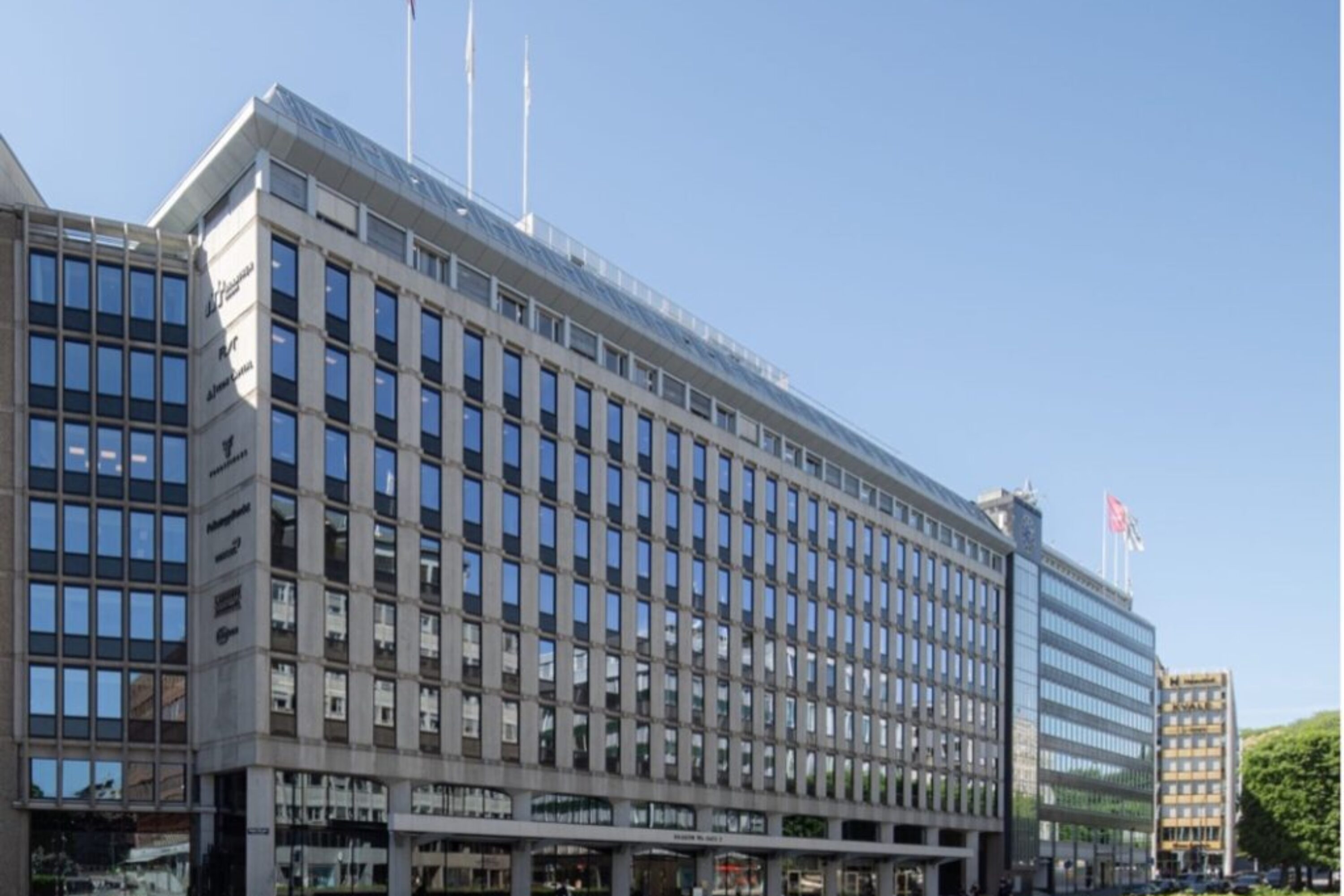
Oslo Cancer Cluster Innovation Park goes fully live with indoor mobile coverage from all Norwegian mobile operators, delivered through Proptivity’s shared indoor mobile infrastructure. The deployment provides reliable mobile connectivity throughout John Ugelstads House, the newest expansion of the innovation park.
The Oslo Cancer Cluster Innovation Park is one of Europe’s leading life science environments, bringing together research institutions, biotech companies, clinicians and innovators focused on advancing cancer treatment and diagnostics. The cluster hosts a growing community of companies, researchers and partners working side by side to accelerate new therapies and medical breakthroughs.
With the system now fully operational, researchers, clinicians and staff benefit from seamless mobile connectivity across laboratories, offices, meeting rooms and common areas.
Strong and reliable indoor mobile coverage supports a wide range of activities inside the building:
- Researchers and clinicians can collaborate and share data securely across labs and workspaces
- Staff and tenants benefit from uninterrupted calls, messaging and mobile-first work tools
- Visitors and partners experience reliable connectivity throughout the property without relying on public Wi-Fi
“At Oslo Cancer Cluster, world-class teams work side by side every day. Reliable connectivity is essential for collaboration and knowledge sharing across our research and innovation environments,” said Marius Håbu Kristoffersen, Senior Technical Manager at Pareto Business Management.
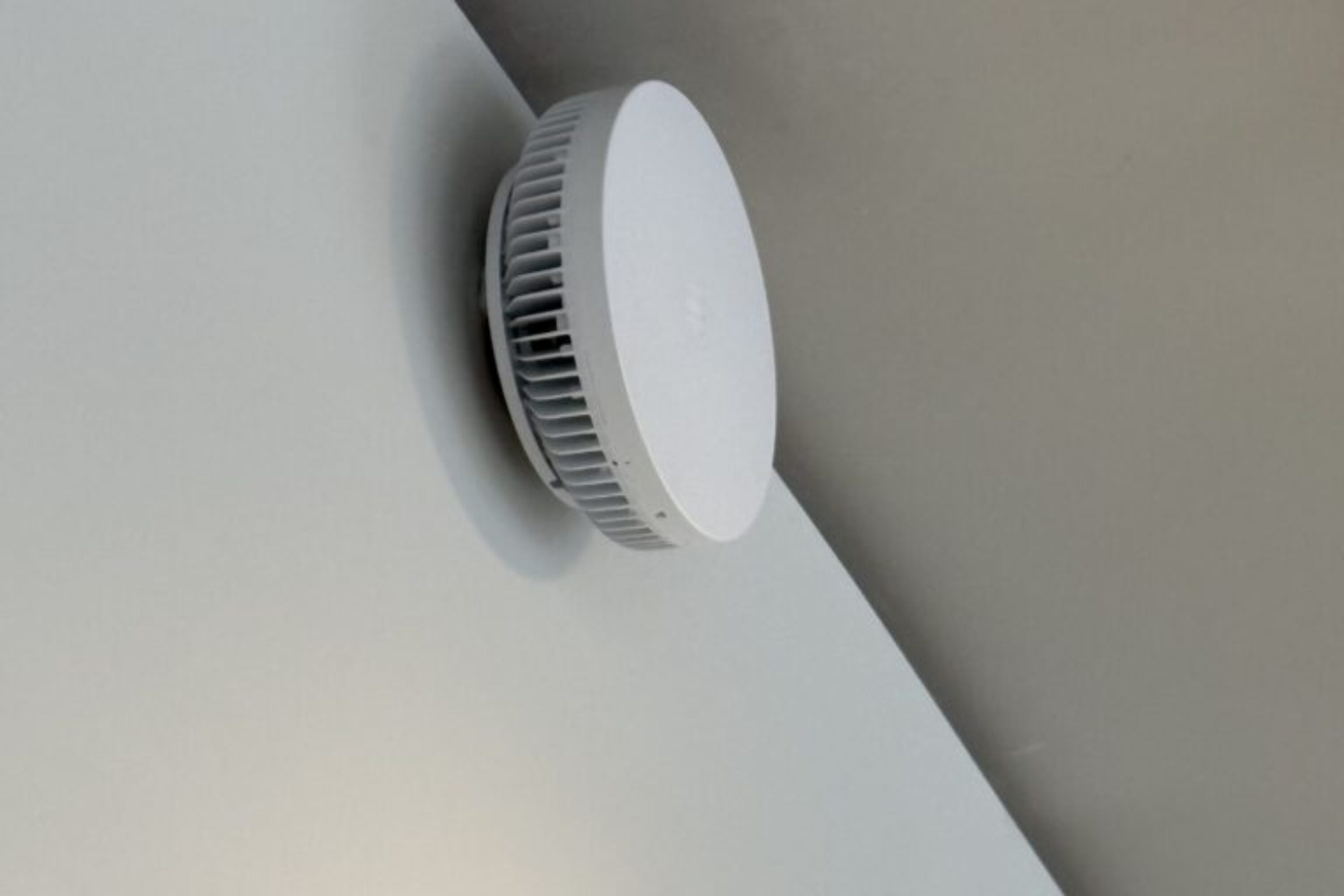
The building is equipped with Proptivity’s energy-efficient small-cell infrastructure, designed to provide strong and consistent mobile performance throughout the property while supporting future generations of mobile technology.
“Oslo Cancer Cluster Innovation Park is an incredibly important environment for research and innovation,” said Christoffer Lundgreen, CEO of Proptivity Norway. “With all operators now live, the building now has reliable indoor connectivity that supports both everyday communication and the advanced digital tools modern research environments depend on.”
The deployment further expands Proptivity’s growing footprint in Norway, where the company works with property owners to deliver future-ready indoor mobile infrastructure across offices, innovation hubs and other modern commercial buildings.
Norska
Alle mobiloperatører nå live i Oslo Cancer Cluster Innovation Park
Oslo Cancer Cluster Innovation Park er nå fullt operativt med innendørs mobildekning fra alle norske mobiloperatører, levert gjennom Proptivity sin delte innendørs mobilinfrastruktur. Løsningen gir pålitelig mobiltilkobling i hele John Ugelstads Hus, den nyeste utvidelsen av innovasjonsparken.
Oslo Cancer Cluster Innovation Park er et av Europas ledende miljøer innen livsvitenskap, hvor forskningsinstitusjoner, bioteknologiselskaper, klinikere og innovatører samarbeider om å utvikle nye behandlingsmetoder og diagnostikk for kreft. Klyngen huser et voksende økosystem av selskaper, forskere og samarbeidspartnere som jobber tett sammen for å akselerere medisinske gjennombrudd.
Med systemet nå fullt operativt får forskere, klinikere og ansatte sømløs mobiltilkobling på tvers av laboratorier, kontorer, møterom og fellesområder.
Den nye løsningen støtter blant annet:
- Sikker samhandling og datadeling mellom forskere og klinikere
• Stabil telefoni, meldinger og mobile arbeidsverktøy for ansatte og leietakere
• Pålitelig tilkobling for besøkende og samarbeidspartnere – uten behov for Wi-Fi
«I Oslo Cancer Cluster arbeider verdensledende fagmiljøer side om side hver dag. Pålitelig mobiltilkobling er avgjørende for samarbeid og kunnskapsdeling på tvers av forsknings- og innovasjonsmiljøer», sier Marius Håbu Kristoffersen, Senior Technical Manager i Pareto Business Management.
Bygget er utstyrt med Proptivity sin energieffektive small-cell-infrastruktur, utviklet for å levere stabil og høy mobilytelse i hele eiendommen, samtidig som løsningen er klar for fremtidige generasjoner av mobilteknologi.
«Oslo Cancer Cluster Innovation Park er et svært viktig miljø for forskning og innovasjon», sier Christoffer Lundgreen, CEO i Proptivity Norge.
«Med alle operatører nå live har bygget fått en robust innendørs mobilinfrastruktur som støtter både daglig kommunikasjon og de avanserte digitale verktøyene moderne forskningsmiljøer er avhengige av.»
Utbyggingen er også en del av Proptivity sin voksende tilstedeværelse i Norge, hvor selskapet samarbeider med eiendomsaktører for å levere fremtidsrettet innendørs mobilinfrastruktur i kontorbygg, innovasjonsmiljøer og andre moderne næringsbygg.
See more pictures
https://proptivity.com/project/oslo-cancer-cluster-innovation-park/
Proptivity completes world-first deployment of new Ericsson feature for fully digital indoor 5G
Proptivity has completed the world’s first deployment of the Ericsson Host Management Control feature, at a commercial property in Oslo. The feature enables a mobile operator to connect its own baseband, digitally, into a shared Proptivity-managed radio infrastructure, with each operator retaining independent control of their own services. It is a new option for operators who want to integrate digitally into shared high-performance 5G infrastructure while managing their own equipment and still enables property owners to secure future-proof 5G across their buildings with a single infrastructure partner.
Operators have integrated into shared in-building systems for decades, but always through analogue signal distribution with limited performance and no path to modern 5G capability. With the Ericsson Host Management Control feature, part of the Ericsson Radio Dot System, operators can now connect their own baseband equipment digitally into a shared radio infrastructure. Each operator configures and controls most radio parameters independently, while Proptivity, as the infrastructure operator, manages the shared parameters that could otherwise impact other operators’ services, ensuring reliable and equal performance for all.
Proptivity is the first infrastructure operator in the world to deploy it. Operators gain access to high-performance shared infrastructure already funded, installed and operated by Proptivity, without the capital cost of a standalone deployment. For property owners, Proptivity manages the entire indoor infrastructure and all operator integrations as a single point of contact, securing building-wide 5G coverage for all users regardless of which operator they are on.
Because Proptivity holds no spectrum licence and serves no subscriber base, it has no commercial stake in which operator a tenant or visitor uses. Every operator connected to the infrastructure is treated equally, and investment decisions are driven by building performance rather than by any individual operator relationship. The property owner carries no capital investment. Proptivity funds the infrastructure against a monthly service fee, ensuring that mobile phones and cellular connected laptops work everywhere in the building, for every operator.
“Introducing the Host Management Control feature represents a major step forward in our advanced indoor solutions,” says Nils Andersson, Head of Indoor Radio, Business Area Networks at Ericsson. “It gives both operators and hosts much greater flexibility in managing access, boosts resource efficiency, and speeds up the secure rollout of new indoor services on a scalable platform. This development is helping to drive the industry towards more efficient and scalable digital indoor solutions with the Ericsson Radio Dot System, in close partnership with Proptivity.”
“Fully digital has been our baseline from day one.” says Mikael Lundman, CEO at Proptivity. “With Host Management Control, operators can integrate digitally into shared indoor infrastructure on their own terms, keeping full control of their own network within a system they do not have to fund or build. For property owners, nothing changes in terms of simplicity. Proptivity manages the infrastructure and all operator relationships. Together, this represents a step change in performance and simplicity for everyone in the building, operators, property owners and tenants alike.”
For more information, contact:
Mikael Lundman, CEO Proptivity, +46 76 115 21 00
Morgan Curby, CMO Proptivity, +46 763 35 07 64
Why the modern office has a mobile problem, and what to do about it
There is a quiet frustration running through most modern office buildings. The glass looks spectacular. The interiors are thoughtfully designed. The energy ratings are excellent. And yet, step into the lift, the basement meeting room or the far corner of a deep floor plate, and mobile signal disappears.
This is not a coincidence. The same materials that make contemporary offices energy-efficient (sealed glazing, reinforced concrete, high-performance insulation) are precisely what keeps mobile signals out. And as the way we use offices continues to evolve, the gap between physical design and mobile performance is becoming harder to ignore.
The office has changed. Mobile expectations have not kept up.
Work is no longer something that happens at a fixed desk. People move around buildings all day, between hot desks, meeting rooms, terraces, garages and collaborative spaces. They expect their devices to follow them. When mobile coverage fails, so does productivity.
The issue is broader than convenience, though. Consider a few scenarios that most office managers will recognise immediately.
A visitor relies on their mobile connection because the host company restricts guest Wi-Fi for security reasons. A staff member cannot complete two-factor authentication in the basement. An emergency call fails because the stairwell has no coverage. A video meeting drops the moment someone steps into the lift.
These are not edge cases. They are daily realities in many commercial buildings across the UK, Sweden, Norway and Denmark.
And the stakes are rising. Around 30% of new business laptops now ship with integrated 5G modems, meaning a growing share of enterprise computing is mobile-first by design. The office building needs to keep pace.
The financial case is increasingly clear
For property owners, this is not just a tenant satisfaction issue. The data on connectivity and asset value has become difficult to dismiss.
Research from WiredScore and Cushman & Wakefield points to average rental uplifts of around 5% for well-certified buildings, rising further when digital and smart certifications are combined. According to Boldyn Networks and Newsec, strong indoor mobile performance is associated with meaningfully lower vacancy risk. And a significant majority of tenants (68% in one survey) now consider high-quality indoor mobile coverage a requirement when evaluating premises.
In competitive leasing markets, weak coverage is no longer a minor inconvenience. It is a leasing risk.
What we have done, and what it looks like in practice
The Proptivity approach is to install shared indoor mobile infrastructure that serves all operators from a single system. No separate installations per operator. No legacy repeaters or passive DAS that were never designed for 5G capacity. One digital architecture, built from the ground up for the way modern buildings actually work.
London: The Folgate Building and The Dacre
In mid-2025, two landmark London office buildings became the first in the UK to deploy Proptivity’s advanced indoor mobile infrastructure. The Dacre in Westminster and The Folgate Building in the City were both advised by MAPP, one of the UK’s leading specialists in commercial real estate management.
The system delivers fibre-backed, active mobile signal across the entire building, including lifts, basements and stairwells. The Folgate Building was the first commercial building in the UK to feature Proptivity’s high-performance indoor 5G infrastructure, with EE being the first operator to go live on the system, using the Ericsson DOT small cell solution on a fully multi-operator, JOTS-compliant basis.
Ben Hughes, Head of Building Technologies at MAPP, noted that strong indoor mobile connectivity had become essential to occupiers’ productivity, employee satisfaction and cybersecurity, and that Proptivity’s solution offered future-proofed technology, energy efficiency and alignment with the clients’ ESG goals.
Stockholm: Sergelhusen with Vasakronan
In Sweden, Proptivity worked with Vasakronan to deploy shared indoor 5G at Sergelhusen, a prominent office development in central Stockholm. Together with one of its tenants, Vasakronan set out to explore how mobile-based technologies such as 5G-connected laptops, flexible IT environments and secure mobile connectivity could simplify operations, support hybrid work, and improve the experience for employees and visitors.
As Nicklas Wållberg Walldan, Head of Development at Vasakronan, put it: “It’s not just about strong coverage, it’s about creating smarter, more sustainable spaces that are ready for the future.”
Stockholm: Epicenter
Epicenter Stockholm, one of Scandinavia’s leading innovation hubs, is now live with full gigabit-speed indoor 5G. Speed tests confirmed gigabit performance indoors. The deployment at Epicenter has become a reference point for what a mobile-first office and innovation environment can look like in practice.
How it works, and why the architecture matters
Legacy indoor systems (repeaters and passive DAS) were designed for a different era. They extended voice coverage reasonably well, but they were not built for the data density and device diversity of a modern office.
Proptivity’s approach, reduces power consumption and equipment footprint significantly compared to legacy distributed antenna systems. The antennas are compact and silent. They integrate into finished interiors without visual disruption. Installation at a typical antenna location takes around two hours, including cabling.
The system is shared across all mobile operators, meaning the property owner signs a single agreement and every major operator can deliver service through the same infrastructure. There is no upfront capital investment required from the building owner. Proptivity funds, installs and operates the infrastructure end to end.
A note on Wi-Fi
The question of how indoor mobile infrastructure relates to Wi-Fi comes up in almost every conversation. The short answer is that they serve different roles and are not in competition.
Within leased office floors, enterprises typically run their own secure Wi-Fi systems for managed devices and internal applications. In shared spaces (lobbies, lifts, meeting rooms, garages, stairwells) mobile is often the more practical and secure solution for both staff and visitors. And for voice calls, two-factor authentication and emergency access, mobile is simply the right answer.
A well-designed office building in 2025 needs both. Neither replaces the other.
What this means for property owners
The office market is increasingly one where tenants arrive with mobile-first expectations. They carry 5G laptops and expect to use them throughout the building. They run video calls between floors. They need reliable authentication for security systems. Their visitors rely on their own mobile connections.
An office building that cannot support this reliably is at a disadvantage. Not in a dramatic way, but in the quiet way that affects leasing conversations, tenant renewals and the building’s long-term positioning in a competitive market.
Indoor mobile infrastructure is not the most visible feature of a premium office. But it is increasingly one of the features that tenants notice most when it is absent.
Proptivity designs, installs and operates shared indoor mobile infrastructure for commercial buildings across the UK, Italy, Sweden, Norway and Denmark.
Telehouse: New Case Study – Proptivity🤝 🌐
We’re excited to share our latest case study showcasing how Proptivity has chosen Telehouse London Docklands as the London hub for its UK rollout of shared Internet of Things (IoT) mobile infrastructure, alongside fibre-delivered, traceable timing from the National Physical Laboratory (NPL).
By establishing their hub at one of Europe’s most connected data centres, Proptivity benefits from:
– Direct interconnection with UK mobile network operators (MNOs)
– Fibre-delivered, traceable timing from the National Physical Laboratory (NPL)
– The precise, high‑integrity timing essential for advanced indoor 5G performance
This collaboration strengthens the UK’s digital ecosystem and supports the deployment of high‑performance indoor 5G systems, expanding reliable, ultra‑low latency connectivity for buildings and businesses across the country.
Read the full case study to explore how this infrastructure is enabling the next generation of IoT and 5G innovation:https://www.telehouse.net/case-study/proptivity/
Sannergata 2 goes fully live with indoor 5G as Ragde Eiendom sets a new standard for connected workplaces
Ragde Eiendom and Proptivity have completed the rollout of high-performance indoor 4G and 5G at Sannergata 2, Ragde Eiendom’s new flagship headquarters in Oslo. With all Norwegian operators now live, the building delivers reliable mobile coverage everywhere, from underground parking to the top floor, supporting a fully mobile-first workday for every tenant.
Located in Oslo’s vibrant Grünerløkka district, the 24,000 sqm flagship combines offices, retail and restaurants, all fully connected through high-performance indoor 5G. Inside Sannergata 2, everything runs on mobile connectivity, from digital door access and canteen payments to meeting-room booking, EV charging and visitor check-ins. With strong and consistent signal from the underground garage to the top floor, the building enables both everyday communication and advanced digital services across every level.
The new system supports a wide range of use cases across the building:
• Office tenants: uninterrupted calls, secure 5G laptop connections and reliable signal in every workspace and meeting room.
• Retail tenants: always-on payment terminals, responsive digital signage and connected inventory tools.
• Visitors and guests: smooth browsing, calls and social sharing without relying on public Wi-Fi.
“Connectivity is no longer something people think about until it doesn’t work,” says Harald Thoresen, Property Manager at Ragde Eiendom. “We wanted a building where that’s never an issue. With full indoor 5G from all operators, Sannergata 2 now delivers the kind of digital experience modern tenants expect.”
Designed with sustainability in focus, the property is targeting BREEAM-NOR ‘Excellent’ certification and an Energy Grade B, reflecting Ragde Eiendom’s commitment to long-term environmental and operational performance.
“With all three operators live, Sannergata 2 sets a new benchmark for what a future-ready office building should offer,” says Christoffer Lundgreen, CEO at Proptivity Norway. “Ragde Eiendom is showing that world-class sustainability and world-class connectivity can go hand in hand. Connectivity isn’t just nice to have; it’s part of the building’s core infrastructure and daily rhythm.”
Proptivity and Vasakronan go live with high-performance indoor 5G at Sergelhusen
Vasakronan and Proptivity have gone live with high-performance indoor mobile infrastructure at Sergelhusen, delivering gigabit-speed 5G connectivity inside one of Stockholm’s most prominent office developments.
The deployment is built on Proptivity’s shared indoor mobile infrastructure platform, designed to provide consistent high-performance connectivity throughout the Sergelhusen complex. The system is multi-operator ready, enabling all Swedish mobile operators to deliver their services through the same infrastructure.
Reliable indoor mobile performance is increasingly becoming a baseline requirement in modern office buildings. As enterprises adopt mobile-first strategies, employees expect their phones, laptops and connected devices to function seamlessly throughout the property, from meeting rooms to elevators and parking areas.
This shift is closely linked to security priorities within enterprise IT. Many organisations are equipping employees with 5G-enabled laptops to provide secure, always-on connectivity based on SIM authentication and operator-grade encryption. Industry estimates indicate that more than 30% of new business laptops are now delivered with integrated 5G modems, reflecting the growing role of cellular connectivity in enterprise environments.
As enterprises build their connectivity and security architecture around cellular technology, indoor performance becomes a natural extension of that model. With gigabit-speed 5G now available inside the covered areas of Sergelhusen, companies can support secure 5G-enabled devices indoors and maintain a consistent connectivity experience across locations.
The infrastructure also supports a growing ecosystem of connected devices, including AI-enabled security cameras, sensors and robotics that rely on reliable, low-latency performance throughout the building.
“Enterprises are increasingly standardising on 5G laptops to strengthen security and simplify connectivity,” says Mikael Lundman, CEO of Proptivity. “Once that model is in place, it raises a simple question: why should the experience be different inside the office? Buildings that deliver reliable indoor 5G allow companies to operate consistently, wherever their people work.”
Across global markets, operators are now introducing advanced 5G enterprise services offering prioritised access and enhanced performance for business users. With high-performance indoor 5G already established at Sergelhusen, tenants are positioned to take advantage of these capabilities as they are introduced in Sweden.
Link to more project information
Visitors at Jorcks Passage now enjoy high-performance indoor mobile from all Danish operators
Visitors and shoppers at Jorcks Passage in central Copenhagen can now enjoy high-performance indoor mobile coverage from 3, TDC, Telenor, and Norlys. The new shared infrastructure, delivered and operated by Proptivity, keeps people connected across every store and corridor. Browsing works, mobile payments go through instantly, and sharing from inside the shops is effortless.
Built in 1896, Jorcks Passage is one of Copenhagen’s most iconic destinations for shopping and work. With its mix of boutiques, restaurants, and offices, it attracts millions of visitors every year. The new mobile infrastructure now ensures that everyone who walks through its glass-roofed arcade enjoys the same high-quality digital experience as they would outdoors, even deep inside the building.
For shoppers, the difference is clear. You can share a photo from the fitting room, check online reviews while comparing products, or pay with your mobile wallet without delay. No more searching for signal or waiting for apps to load. For retailers, the upgrade removes one of the biggest friction points in digital retail, poor in-store connectivity. It allows QR-based offers, digital signage, in-store apps, and click-and-collect services to run smoothly, even during the busiest hours.
Office tenants benefit just as much. With strong and secure coverage throughout, employees can work anywhere with smartphones and 5G-ready laptops, staying connected in meeting rooms, lounges and shared spaces without relying on Wi-Fi.
“Jorcks Passage has always combined tradition and modern city life,” says Bjarke Bendix Cloos, CEO of Jorcks Ejendomsselskab. “By introducing high-performance mobile coverage from all operators, we’ve strengthened that experience for every visitor and retailer, while keeping Jorcks at the forefront of digital innovation.”
“This is Proptivity’s first live building in Denmark, and it’s performing exactly as designed,” says Mikael Lundman, CEO of Proptivity. “High-performance coverage, full-operator integration, and a better experience for everyone who steps inside. Jorcks Passage shows what modern indoor infrastructure should deliver.”
See more information about the project
Proptivity brings advanced indoor 5G to UK commercial properties using Ericsson technology
Proptivity, Europe’s leading high-performance indoor mobile infrastructure provider, is deploying Ericsson’s Radio Dot System to deliver advanced 4G and 5G coverage inside UK commercial properties. The company has already implemented this technology in multiple buildings across Europe and was the first in the UK to go live with a multi-operator 5G indoor system based on Ericsson’s solution. The collaboration combines Ericsson’s proven small-cell platform with Proptivity’s end-to-end delivery model to enable future-ready connectivity for modern buildings.
“As people spend most of their time indoors, it’s essential that 5G delivers where it’s needed most,” said Luca Orsini, Head of Ericsson North Europe. “With the Radio Dot System, we’re enabling high-capacity, low-latency connectivity that supports both today’s business-critical applications and tomorrow’s innovations.”
Purpose-built for dense indoor environments such as offices, shopping centres, and transport hubs, Ericsson’s Radio Dot System delivers:
- High capacity and low latency for data-heavy and real-time use cases.
- Energy-efficient design with centralised processing.
- Multi-operator integration through JOTS compliance.
These capabilities enable property owners to:
- Offer reliable 5G laptop connectivity without dependence on Wi-Fi.
- Support AR/VR-enabled collaboration for design, training, and client engagement.
- Deploy IoT devices such as sensors, cameras, and digital signage throughout their buildings.
- Strengthen building safety through secure mobile communications for staff and emergency services.
- Deliver future-ready workplaces that meet sustainability and ESG goals.
“These buildings demonstrate what can be achieved when advanced technology is paired with a shared infrastructure model,” said Nic Budden, UK CEO at Proptivity. “With Ericsson’s Radio Dot System, we can help property owners deliver a digital workplace that is both high-performance and environmentally efficient.”
The Ericsson Radio Dot System is one of the most widely deployed indoor small-cell solutions globally, used by over 125 mobile operators in 70 countries. Independent research firm ABI Research (2025) named Ericsson the world’s leading small-cell vendor for both innovation and implementation.
Together, Proptivity and Ericsson are setting the standard for high-performance indoor mobile infrastructure in the UK, helping property owners deliver reliable, sustainable connectivity that supports mobile-first work, digital services, and future ESG objectives.
The Folgate Building marks first high-performance small cell 5G indoor deployment from Proptivity and EE
London’s Folgate Building in Liverpool Street is the first commercial building in the UK to feature Proptivity’s high-performance indoor 5G infrastructure. The service ensures strong, secure mobile coverage throughout the building and is designed to support all major UK mobile operators, with EE being the first to go live on the system. For property owners, the benefits are clear: stronger tenant appeal, higher rental potential, and a more energy-efficient way to deliver digital readiness.
This flagship project also marks the start of a broader rollout following the strategic agreement between BT Group – parent company of EE – and Proptivity, which will see them deliver indoor 5G connectivity to customers. The installation uses the Ericsson DOT small cell solution and is fully multi-operator and JOTS-compliant, setting a new benchmark for indoor 5G performance across the UK. While EE has an established footprint in delivering 5G indoor connectivity across the UK through its own small cell deployments, this marks the first time partnering with a neutral host provider to deliver its connectivity through such technology.
“This partnership with Proptivity and the Folgate Building is leading the way in showing what’s possible when operators and infrastructure specialists work together to bring fast, secure mobile coverage into the heart of the workplace,” said Reza Rahnama, Managing Director of Mobile at BT Group.
With Proptivity’s infrastructure in place, tenants and visitors can stay connected throughout the building, from underground meeting rooms to top-floor lounges. That means no more dropped calls, no more Wi-Fi workarounds, and full mobile access to underpin business operations.
Beyond reliable voice and data services, this next-generation setup also unlocks new and advanced use cases, including:
- Enterprises using 5G laptops for higher mobility and security
- Easily deployed wirelessly connected security cameras
- Mobile tools in retail, hospitality, and front-of-house operations
- Secure mobile communications for contractors, vendors, and maintenance teams
Reliable indoor mobile coverage is no longer optional — it’s a competitive advantage. People spend about 90% of their time indoors, and 80% of mobile data is consumed there. On the business side, 89% of companies looking for new premises rank strong connectivity as essential, and nearly 96% of enterprises would pay more in rent for dependable indoor coverage. Proptivity’s solution enables owners to meet these demands without capital investment or technical complexity.
Unlike legacy solutions that require separate systems for each operator, Proptivity’s shared infrastructure all UK mobile operators through a single, unified system. Fully funded, installed, and operated by Proptivity, it reduces equipment duplication and energy use, helping property owners meet environmental targets while delivering high-quality digital services.
“With Folgate Building going first, we’re showing how high-performance indoor 5G can be scaled across the UK office market,” said Nic Budden, UK CEO at Proptivity. “It’s a smarter, greener way to future-proof buildings and keep tenants connected.”
See building reference case: https://proptivity.com/project/folgate-building/