
Proptivity Insights
Understanding indoor mobile coverage and its value
Research, practical guides and tools to understand mobile coverage inside buildings, and what better connectivity means for the people who use them.
Explore the research ↓
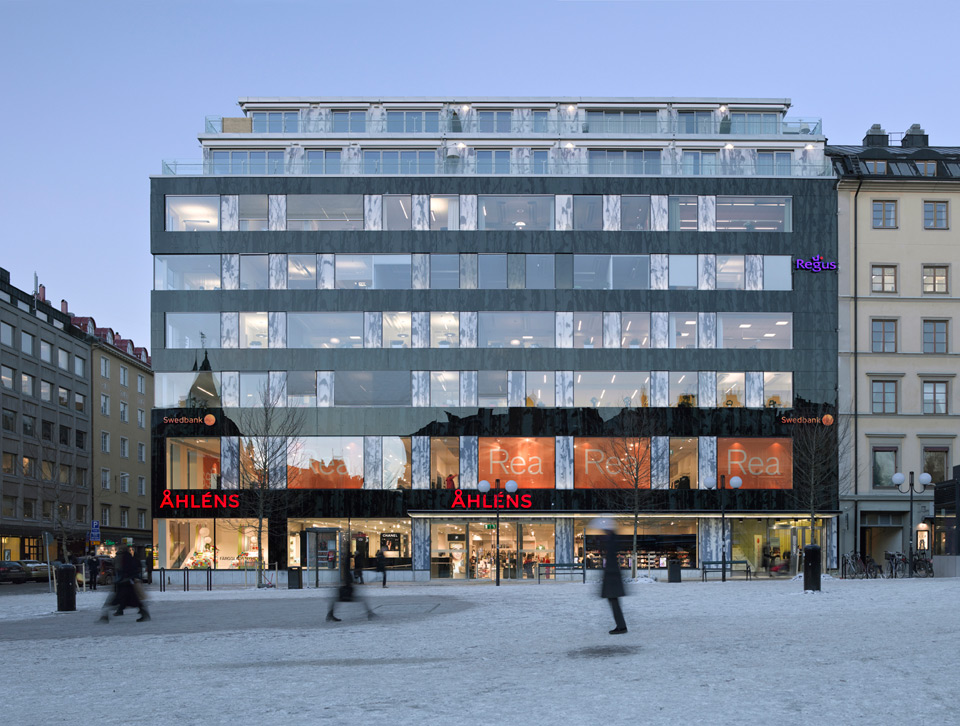
Sergelhusen, Stockholm
Everyday needs
Why do we need mobile coverage indoors?
People use their phones throughout a building, often without access to its Wi-Fi. They need to make calls, receive login codes, use work apps and stay in touch as they move between rooms and floors.
- Staff, visitors and tenants have different needsEmployees may use the office Wi-Fi, but visitors, contractors and delivery teams often depend on their mobile connection.
- Coverage needs to reach beyond the deskMeeting rooms, shops, lifts and garages are all places where people expect to use their phones.
- The type of building mattersA hospital, hotel and shopping centre use connectivity in different ways. The property guides below explain those needs in more detail.
Mobile use meets indoor life
Up to 80%of mobile data is consumed indoors
Ericsson Mobility Report, November 2023. An industry estimate, not a measurement of every building.94%
of UK respondents would pay more rent for better connectivity.
Boldyn-commissioned survey, January 2025. More than 2,000 business leaders across the UK and US overall. The UK figure covers Wi-Fi and cellular connectivity and expresses willingness, not actual rental transactions.External research and guidance
External findings include industry research and a supplier-commissioned survey. Their origins and scope are shown above.
Proptivity articles and research
 ArticleMobile first: secure and cost-effective indoor connectivity
Explore the needs of your property type
 Property guide · ProptivityEducation
 Property guide · ProptivityTransport Hubs
 Property guide · ProptivityLogistics and Industrial
 Property guide · ProptivityMunicipalities
 Property guide · ProptivityHospitals and Healthcare
 Property guide · ProptivityLife Science
 Property guide · ProptivityHotels and Hospitality
 Property guide · ProptivityRetail and Malls
 Property guide · ProptivityOffice
Watch: connectivity in everyday life
Three short Proptivity films exploring the issues people encounter when getting connected.
The coverage picture
How good is indoor coverage today?
Look beyond the signal bars. Start with measurements and real experiences.
- See the overall pictureExplore evidence from cities and commercial buildings.
- Look at the differencesExperience can vary by room, floor, operator and time of day.
- Understand the evidenceMeasured readings describe observations. Estimates help explore a scenario. Neither is a substitute for a building-specific assessment.
Greater London · Grade A and B offices
London office buildings.
One revealing coverage picture.
External research and guidance
Newsec’s study covers 1.5 million m² in Sweden, the UK and Denmark. Its summary reports up to 97% coverage with indoor systems versus 65% without. This is a separate sample and measure from the London analysis. Ofcom provides wider national context.
Proptivity articles and research
 ReportAttractive London offices and the indoor coverage gap
The causes
Why is indoor coverage often poor?
The signal needs to reach people inside. It also needs enough capacity to serve them.
- Reach the buildingThe outdoor network determines which mobile signals arrive at the property.
- Get through the buildingGlass, concrete, insulation and the layout can weaken signals before they reach occupied spaces.
- Support the demandA visible signal does not guarantee enough capacity for everyone using it.
Construction and observed coverage
Share of sampled buildings classified as “Poor”
Proptivity’s 472-building London analysis. These are building groups, not laboratory measurements of material signal loss. Location, network conditions and building design also vary.Modern glazing and insulation can weaken incoming mobile signals.
Ofcom’s indoor coverage guidance explains why a good outdoor signal may not reach the rooms inside.External research and guidance
Building materials are one part of the explanation. Coverage and capacity should be assessed separately, across the spaces and operators people actually use.
Proptivity articles and research
The options
How can indoor coverage be improved?
Start with what people need. Then compare the approaches that can deliver it.
- Define good performanceConsider coverage, capacity, mobile operator access and consistent service.
- Understand the optionsWi-Fi calling, boosters, DAS and small cells work differently. Compare them against your building’s needs.
- Plan for everyday operationShared infrastructure, operator integration and ongoing management matter as much as installation. Neutral host describes a sharing and operating model.
Four approaches, different roles
Routes supported calls through Wi-Fi. Depends on device and operator support and a usable Wi-Fi connection.
Bring an existing outdoor mobile signal indoors. Need a suitable donor signal and do not add a new mobile radio cell.
Distribute a mobile signal around a building. Performance depends on the signal source and system design.
Add local mobile radios. Need backhaul and operator integration, with capacity planned for the building.
External research and guidance
Neutral host describes how infrastructure is shared and operated; it is not a fifth radio technology. Vendor comparisons should be checked against their specific products and assumptions.
Proptivity articles and research
 ComparisonPassive DAS and small cells
The value
What value does better indoor connectivity create?
Smoother everyday experiences. New services. A property that supports how people want to work.
- Everyday valueFewer interruptions for people using the building, from a phone call to a mobile workflow.
- New possibilitiesBusinesses can explore connected devices and services. Property owners and mobile operators can share infrastructure to serve indoor users.
- A clearer investment decisionExplore potential benefits alongside investment and running costs. A scenario helps test assumptions; it does not promise a financial return.
Two studies. Different measures.
Around 10%higher asking rents for reliably covered versus poorly covered large Grade A London offices, after adjustment for local peer groups.
Proptivity analysis, 2026. Subset of the 472-building study: Grade A offices of at least 100,000 sq ft.2.7%
rent uplift associated with WiredScore-certified buildings in New York.
Moody’s Analytics CRE and WiredScore, December 2022. Certification covers broader digital connectivity, not mobile coverage alone. Both studies show associations, not proof that an upgrade causes higher rent.External research and guidance
Asking rents, achieved rents and survey intentions are different measures. The studies below should inform a business case rather than be treated as a promised return.
Proptivity articles and research
Continue exploring
Find your next perspective.
Browse the complete Insights library for reports, explainers, project stories and industry news.